
The starting point
Light color and brightness are different choices. Compare the appearance of a new light in your room with the lamps, paint and surfaces you already have before choosing a whole set.
Separate brightness from color
The Department of Energy describes lumens as a measure of light output, while color temperature is expressed in kelvins. A light can look warmer or cooler without simply being brighter. Use the product information to compare like with like instead of relying on the wattage alone.
Look at the room in the evening
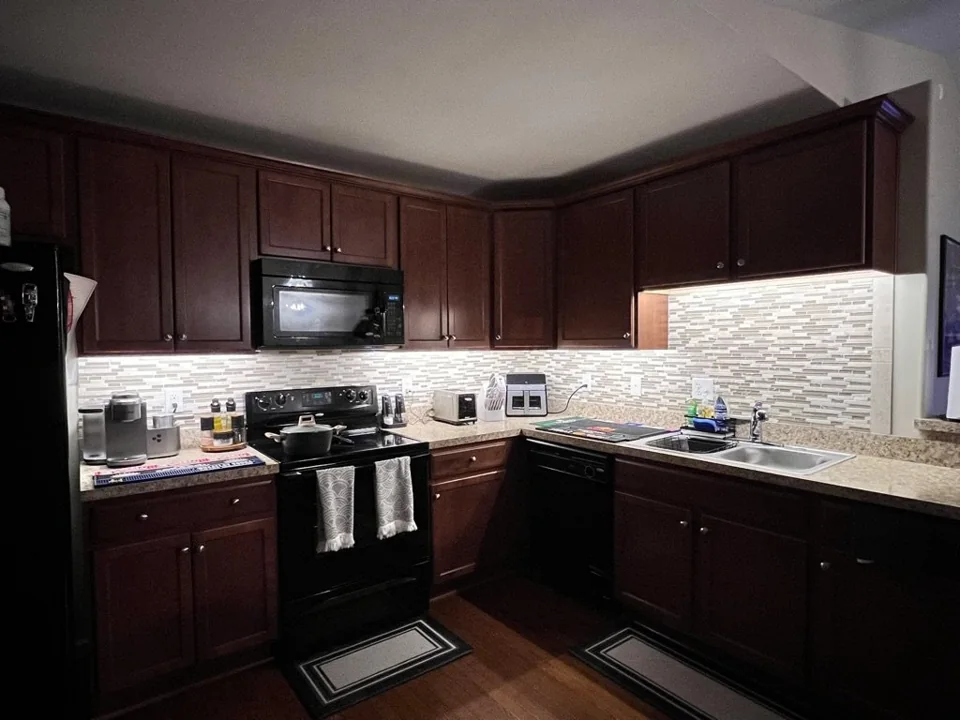
Daylight can make a choice look different. Compare the new light with the other lights you normally leave on, particularly in adjoining spaces. Notice how the counter, wall color and wood finishes look. A small sample is more informative than a product photo on a phone.
Think about more than one routine
Food preparation, reading and a quiet evening can call for different levels of light. Dimming may help, but the light, power supply and control must be compatible. Explain the routine you want rather than assuming an existing dimmer can control any replacement.
Keep a record of the choice
Save the product model and specifications once you settle on a light. If you later add another run or replace a bulb, those details are more useful than remembering that it looked warm. Maz can discuss how the choice fits the wider project.
Bring these to the conversation
- Photo of the room with current lights on
- Existing bulb or fixture labels
- The times of day you use the space
- Dimming or simple switching preference
Useful sources
U.S. Department of Energy: consumer guide to lightingSource information checked October 7, 2026. Use the official source for current requirements and product details.
Planning information from FIXABL for homeowners in Richmond, Midlothian and Chesterfield County. The approach, qualifications and approvals needed for your home depend on the specific work and an assessment.