
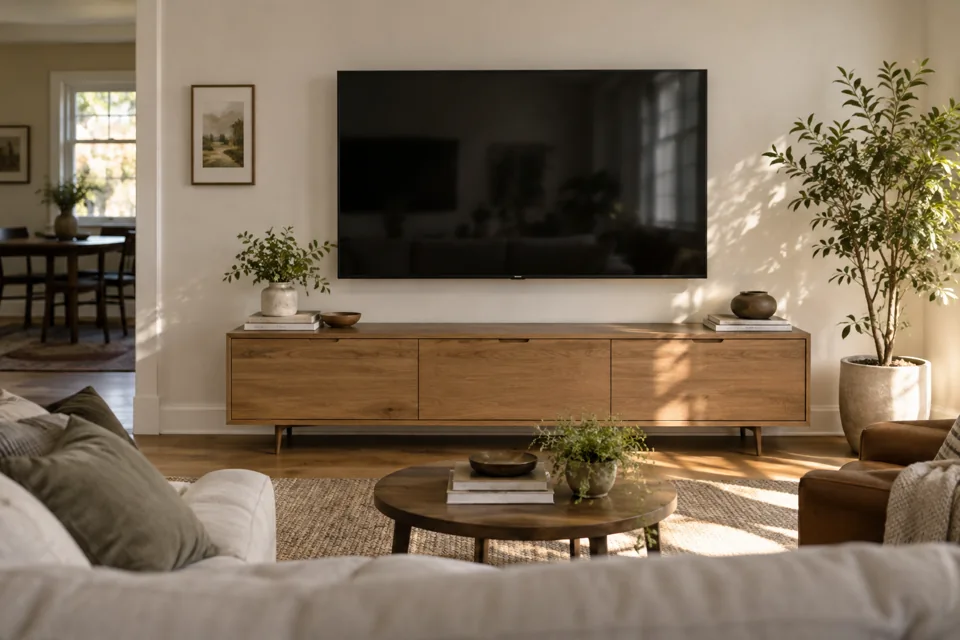
The starting point
Cable concealment is easiest to plan before the screen goes on the wall. A tidy surface route may be enough; an in-wall route requires a separate check of the wall, cables and power arrangements.
Begin with the equipment that stays
List the streaming box, games console, soundbar and other devices you actually use. Decide where each will live and which needs easy access. A small change to the media furniture may reduce visible cabling without changing the wall at all.
Consider a surface cover
A surface cable cover can organize an exposed route. Think about its path, the wall finish and whether it can be positioned behind furniture. Ask how it will look from the usual seating position. Concealment does not have to mean opening the wall.
Treat power as a separate decision
The Electrical Safety Foundation advises against running extension cords through walls. An in-wall plan needs suitable components and assessment of any electrical work, including applicable permits and trade requirements. Share the existing outlet location with Maz and discuss a suitable scope before installation.
Leave a way to change things
You may replace a streaming device or add a console later. Ask how connections will remain accessible and how a cable could be changed. Photograph or label the agreed arrangement after setup so the room is easier to maintain.
Bring these to the conversation
- List of connected devices
- Photo of the existing outlet
- Preference for surface or concealed routing
- Room for future device changes
Useful sources
Electrical Safety Foundation: using extension cords safelySource information checked October 7, 2026. Use the official source for current requirements and product details.
Planning information from FIXABL for homeowners in Richmond, Midlothian and Chesterfield County. The approach, qualifications and approvals needed for your home depend on the specific work and an assessment.